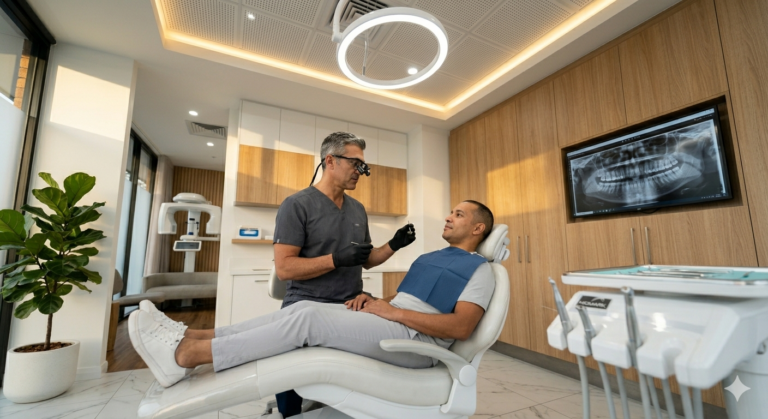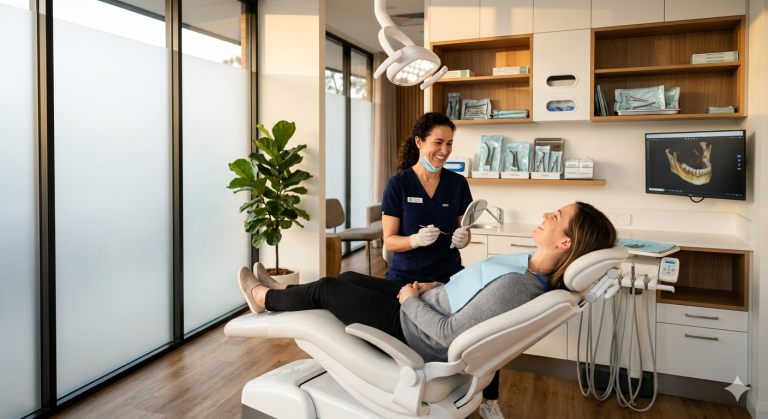

If you’re considering cosmetic dentistry options in Lancaster, CA, you want clear, local guidance that fits your lifestyle and budget. They explain modern choices—from subtle whitening to full smile makeovers—and how each option can address common concerns like stained, chipped, or misaligned teeth.
You can find effective, personalized solutions nearby, including veneers, teeth whitening, clear aligners, and implant restorations, so you don’t have to travel far for expert care. The article walks through what to expect, typical costs and financing, and how a local cosmetic dentist tailors treatment for comfort and long-term results.
Expect straightforward explanations of procedures, real-world benefits, and practical next steps for scheduling a consultation or getting questions answered so you can move forward with confidence.
Cosmetic dentistry focuses on improving the appearance of teeth and smiles while often supporting function and oral health. Readers will learn what cosmetic dentistry includes, how it differs from general dentistry, and the specific goals patients typically seek.
Cosmetic dentistry includes treatments designed to change the look of teeth, gums, and bite. Common procedures are teeth whitening, porcelain veneers, dental bonding, tooth-colored fillings, clear aligners, and gum contouring. Each procedure targets a specific concern: whitening removes stains, veneers cover chips or gaps, bonding repairs small fractures, and aligners correct mild-to-moderate misalignment.
Candidates for cosmetic work usually have healthy gums and no active decay; dentists often address those issues first. Treatment plans combine aesthetic goals with practical steps — for example, choosing veneers for size and shape changes while preserving as much natural enamel as possible. Costs, timelines, and maintenance vary by procedure and should be discussed during a consultation.
General dentistry focuses on prevention, diagnosis, and treatment of oral disease, such as cavities, gum disease, and infections. Cosmetic dentistry centers on appearance, though many cosmetic procedures overlap with restorative care. For example, a crown can both restore a tooth’s function and improve its look.
Licensing and training for dentists cover both fields, but cosmetic cases often require additional elective training or collaboration with dental laboratories. Insurance typically covers medically necessary restorative work but rarely covers purely aesthetic procedures. Patients should weigh functional needs, long-term tooth health, and aesthetic desires when choosing treatments.
Patients commonly seek cosmetic dentistry to whiten stained teeth, close gaps, correct minor alignment issues, repair chips, and improve tooth shape or proportion. They often want a natural-looking result that fits facial features and maintains comfortable chewing and speech. Clinicians aim for symmetry, color harmony, and a durable finish that resists staining.
Treatment choices depend on the problem’s severity, budget, and how long the patient wants results to last. For instance, in-office whitening gives fast results for surface stains, while veneers offer a longer-term solution for shape and color but require more tooth preparation. Dentists discuss pros, cons, and aftercare so patients make informed decisions aligned with their lifestyle.
A personalized smile makeover combines cosmetic and restorative options to match a patient’s facial features, budget, and lifestyle. It balances aesthetics, function, and long-term oral health so results look natural and last.
The dentist begins with a detailed intake: medical history, dental concerns, and aesthetic goals. They perform a clinical exam, digital photos, and intraoral scans to document tooth position, gum contours, and wear patterns. Radiographs (bitewing and panoramic) check for decay, bone levels, and hidden issues that affect treatment choices.
A smile analysis measures tooth proportions, midline, and smile line relative to the lips and face. The clinician discusses habits—bruxism, staining from coffee or tobacco, and past orthodontics—that influence results. They review expectations, timeline, and initial cost estimates, and may use mock-ups or digital smile design images so the patient can preview likely outcomes.
The dentist creates a step-by-step plan tailored to priorities: whitening, veneers, crowns, orthodontics, or gum recontouring. They sequence treatments to protect tooth structure—for example, whitening before bonding or veneers—to improve adhesion and shade matching. When needed, they coordinate with specialists (orthodontist, periodontist, oral surgeon) and schedule conservative options first.
The plan includes materials and maintenance: porcelain vs. composite veneers, crown materials, and expected lifespan. It lists anesthesia choices, recovery expectations, and follow-up visits. The team provides a written estimate, payment options, and preventive steps—nightguard for bruxism, home whitening touch-ups—to preserve results and minimize future procedures.
Lancaster patients often seek treatments that improve color, shape, and alignment with minimal downtime. Options range from in-office whitening to porcelain restorations, each chosen for durability, appearance, and the patient’s comfort and budget.
Professional teeth whitening in Lancaster typically uses concentrated hydrogen peroxide or carbamide peroxide gels applied by a dentist. In-office systems such as LED-accelerated whitening deliver noticeable results in one appointment, often lightening teeth by 4–8 shades depending on staining and enamel thickness.
Dentists evaluate tooth sensitivity and existing restorations before treatment and may recommend desensitizing protocols or custom take-home trays. Take-home trays use lower-concentration gel and provide gradual whitening over 1–2 weeks, which suits patients with sensitivity or those preferring controlled results.
Ideal candidates have extrinsic staining from coffee, tea, tobacco, or aging. Whitening does not change the color of crowns or veneers, so dentists coordinate restorations after whitening for a consistent match.
Porcelain veneers are thin shells bonded to the front of teeth to correct chips, gaps, severe discoloration, or minor misalignment. Lancaster dentists commonly use feldspathic or lithium disilicate porcelain for strength and lifelike translucency, producing a natural appearance under different lighting.
The veneer process usually involves 2–3 visits: consultation and shade selection, conservative enamel preparation, and final bonding. Digital smile design and mockups help patients preview results and adjust shape or length before permanent placement.
Veneers require good oral health and adequate enamel. They last 10–15+ years with proper care, and maintenance includes routine hygiene, avoiding hard bites on non-food items, and periodic dental exams to check margins and neighboring teeth.
Cosmetic bonding uses tooth-colored composite resin to repair chips, close small gaps, or reshape teeth in a single visit. The dentist roughens the enamel, applies bonding agent, sculpts resin to the desired form, then cures and polishes it to blend with adjacent teeth.
Bonding provides a conservative, cost-effective alternative to veneers when structural damage is minor. It’s reversible and preserves most natural tooth structure, but composite is less stain-resistant and durable than porcelain, typically lasting 5–10 years.
Dentists match resin shades precisely and finish with polishing techniques to mimic enamel luster. They advise avoiding excessive staining foods and grinding; a nightguard may be recommended if bruxism threatens the restoration.
Tooth-colored fillings (composite restorations) replace decayed or damaged tooth structure with resin that matches the natural shade. Lancaster dentists place these restorations using adhesive techniques that bond to tooth enamel and dentin, preserving more healthy tooth than traditional amalgam.
Composites set with LED curing lights and allow for conservative tooth preparation and immediate contouring. They work well for small-to-moderate cavities, fractured cusps, and cosmetic improvements on visible teeth where aesthetics matter.
Benefits include chemical bonding, minimal thermal conductivity, and improved aesthetics. Longevity depends on size, location, oral hygiene, and bite forces; most composites last 5–12 years. Dentists evaluate each case and may recommend alternatives like ceramic inlays or crowns for larger defects.
These treatments restore function, appearance, and long-term oral health using precise, modern techniques. They prioritize comfort, durability, and a natural look while offering clear options for single teeth or full-arch needs.
Dental implants replace missing tooth roots with a titanium post surgically placed into the jawbone. After osseointegration—typically 3–6 months—the post supports a custom abutment and ceramic crown that matches adjacent teeth in shape, color, and translucency.
Candidates need sufficient bone; when bone is thin, ridge augmentation or sinus lift procedures can rebuild support. Mini implants and immediate-load implants offer alternatives for lower bone volume or faster restorations, though case selection matters. Implants preserve jawbone, prevent neighboring tooth shifting, and restore biting force close to natural levels.
Postoperative care focuses on soft-tissue healing and hygiene. Patients perform gentle cleaning around the implant, attend periodic maintenance visits, and avoid tobacco to improve long-term success. With proper care, implants often last decades and provide a stable, esthetic solution for single or multiple missing teeth.
Modern crowns restore broken, worn, or root-treated teeth with strength and esthetics. Dentists use materials like zirconia, lithium disilicate (e.max), and layered porcelain to balance durability and lifelike translucency. Choice depends on location: zirconia suits molars for strength; lithium disilicate offers superior appearance for front teeth.
Preparation usually requires 1–2 appointments: tooth reduction, digital scans or impressions, and placement of a precision-fit crown. CAD/CAM milling can deliver same-day crowns in many practices, reducing temporaries and chair time. Proper margin fit and occlusal adjustment prevent sensitivity and premature wear.
Patients should avoid very hard foods on new crowns for the first week and maintain routine flossing and check-ups. Crowns protect the underlying tooth structure and, when matched properly, are indistinguishable from natural teeth.
Fixed bridges replace one or more adjacent missing teeth by anchoring prosthetic teeth to neighboring abutment teeth or implants. Traditional bridges use crowns on natural teeth, while implant-supported bridges attach to two or more implants for greater preservation of adjacent teeth and bone.
Bridge design considerations include span length, abutment tooth health, and bite forces. Dentists evaluate possibility of minimally invasive adhesive bridges (Maryland bridges) when abutment teeth are healthy and removal of tooth structure should be minimized. Material options mirror crowns—porcelain fused to zirconia or full-contour zirconia—to balance strength and esthetics.
Maintenance requires excellent daily hygiene under the pontic and routine professional exams to monitor fit and gum health. With good care and correct case selection, bridges provide predictable, esthetic function for years.
Orthodontic choices in Lancaster CA now balance appearance, comfort, and treatment speed. Patients can pick nearly invisible aligners or updated metal/ceramic braces depending on tooth movement needs and lifestyle.
Clear aligners (Invisalign and similar brands) use a series of custom, removable trays to move teeth incrementally. They suit mild to moderate crowding, spacing, and some bite corrections. Patients typically change trays every 7–14 days and see progress checks every 6–10 weeks.
Advantages include near-invisibility, easy removal for eating and oral hygiene, and fewer emergency visits for broken wires. Limitations include the need for 20–22 hours of wear per day and reduced effectiveness for complex vertical movements or large rotations. Cost varies by case complexity; many Lancaster practices offer financing and in-house payment plans.
Clear ceramic brackets (often called “clear braces”) attach to teeth but use tooth-colored brackets and wires for a low-profile look while handling more complex movements than aligners. Ceramic systems require careful brushing to avoid staining and occasional bracket replacement.
Contemporary traditional braces use smaller, rounded brackets and heat-activated nickel-titanium wires for gentler, more efficient movement. These systems remain the best option for significant malocclusion, severe crowding, and vertical corrections such as open bites.
Cosmetic-focused traditional options include tooth-colored ceramic brackets and white-coated wires that blend with enamel. These choices reduce visual impact while maintaining the full corrective power of fixed appliances. Patients should expect routine adjustments every 4–8 weeks and temporary dietary changes to avoid bracket or wire damage.
Lancaster orthodontists often combine braces with adjunctive treatments — interproximal reduction, elastics, or temporary anchorage devices — to shorten treatment time and improve final alignment. Practices routinely discuss expected duration, retention plans, and cost estimates during the consultation.
Choosing a dentist nearby makes scheduling, follow-up, and emergency care simpler. Patients gain tailored treatment plans, clearer communication, and a familiar office environment that supports comfort and long-term oral health.
A local cosmetic dentist provides easier scheduling for multi-visit treatments like veneers or Invisalign. Shorter travel time reduces missed appointments and allows timely adjustments during the bonding, shaping, or aligner refinement stages.
Proximity also speeds emergency responses. If a temporary crown dislodges or an implant site becomes tender, same-week or same-day visits limit complications and protect investment. Regular recall visits for polishing, stain control, or shade matching become practical rather than burdensome.
Local offices often coordinate with nearby labs and specialists. That means faster turnaround for custom crowns, porcelain veneers, or whitening trays, and smoother referrals to periodontists or oral surgeons when needed.
A dentist who practices in Lancaster, CA, recognizes regional lifestyle factors that affect smiles—sun exposure, dietary habits, and community aesthetic preferences. They can recommend shade choices and maintenance routines suited to local sunlight and common foods.
They also understand demographic trends, such as the prevalence of certain bite issues or common cosmetic goals in the area. That knowledge informs realistic treatment timelines and cost estimates that reflect local market conditions.
Communication fits local expectations. Staff can explain financing, insurance interactions, and aftercare using clear, locally relevant examples, making decisions less confusing and more practical for the patient.
Local cosmetic dentists build continuity of care over years, not just a single procedure. This continuity enables tracking of treatment outcomes—how veneers hold up, how whitening responds to maintenance, or how restorative work integrates with aging natural teeth.
Familiarity breeds trust. Patients who return to the same team are more likely to share concerns early, follow preventive advice, and receive tailored maintenance plans that extend the life of cosmetic work.
Practices rooted in the community also offer incremental upgrades. They can phase a smile makeover across multiple visits, adjust plans based on lifestyle changes, and provide consistent documentation of progress for predictable, long-term results.
Patients can expect a comfortable, technology-driven experience with clear steps, realistic timelines, and specific aftercare instructions to protect their investment.
Dental teams in Lancaster use local anesthetics, topical numbing gels, and dental sedation when needed to minimize pain and anxiety during procedures such as veneer placement, crown preparation, or composite bonding. Staff often perform a pre-procedure review of medical history and current medications to tailor anesthesia and reduce risks.
Chairside comfort measures include soft pillows, warm blankets, noise-cancelling headphones, and short 10–15 minute breaks during longer visits. Patients should ask about oral sedation (a single, controlled dose of medication taken before the appointment) if they have strong dental anxiety.
Communication matters: clinicians explain each step before beginning and check sensitivity levels throughout the appointment. If sensitivity or pain arises, the dentist adjusts the anesthetic or technique immediately.
Lancaster practices commonly use digital impressions (intraoral scanners) to replace messy putty molds, producing highly accurate 3D models for crowns, veneers, and Invisalign. These scans shorten appointment time and improve fit, which reduces the need for adjustments.
Same-day restorations often rely on CAD/CAM milling machines that fabricate ceramic crowns or onlays in-hours, allowing patients to leave with a finished restoration after a single visit. For whitening, LED-accelerated systems combined with custom trays deliver predictable shade changes within one to three office visits.
Minimally invasive approaches—microabrasion for surface stains, composite resin for small chips, and tooth-conserving veneer preparations—preserve healthy enamel. Imaging like digital X-rays and CBCT (when indicated) helps plan treatment precisely and avoid surprises.
Right after treatment, expect temporary sensitivity for 24–72 hours; clinicians recommend using a desensitizing toothpaste and avoiding very hot or cold foods initially. For bonded restorations, patients should avoid sticky or hard candies for two weeks while the bond fully matures.
Daily care remains critical: brush twice with a soft-bristled brush, floss once daily, and use a non-abrasive fluoride toothpaste to protect margins and prosthetic surfaces. Schedule professional cleanings every 3–6 months as recommended; hygienists remove surface stains and check restoration integrity.
For whitening and veneers, maintain results by avoiding tobacco and limiting coffee, tea, and red wine; consider touch-up whitening trays every 6–12 months. Report loose crowns, persistent pain, or color changes promptly to prevent more involved repairs.
Cosmetic dental care in Lancaster, CA involves specific costs and several payment options tailored to patients’ budgets and treatment goals. Patients should expect clear estimates, insurance guidance when applicable, and flexible financing plans from local practices.
Costs vary by procedure and materials. Common price ranges in Lancaster: professional teeth whitening $300–$800; porcelain veneers per tooth $900–$2,500; single-tooth crowns $800–$1,800; Invisalign or clear-aligner treatment $3,000–$6,500; dental bonding $200–$600 per tooth; full-mouth smile makeovers can exceed $20,000 depending on scope.
Material choice matters: e.max or zirconia crowns cost more than porcelain-fused-to-metal but offer superior aesthetics. Lab fees, sedation, and preparatory work (like gum reshaping) add to final bills.
Dental practices in Lancaster typically provide an itemized treatment plan with expected fees, the number of visits, and any lab timelines. Patients should request written estimates and compare warranties on restorations. Asking about long-term maintenance costs—nightguards, replacement crowns, routine polishing—helps avoid surprise expenses.
Most Lancaster dental offices accept major credit cards and offer in-house payment plans that split costs across treatment phases. Many also work with third-party medical financing companies (CareCredit, LendingClub Patient Solutions) providing 6–60 month plans, often with promotional interest-free periods.
Insurance usually does not cover purely cosmetic work, but components that are restorative (crowns after trauma, orthodontics for health reasons) may receive partial coverage; offices can provide pre-treatment estimates to submit to insurers.
Patients should request a financing worksheet that shows monthly payments under different terms. Compare interest rates, deferred-interest clauses, and penalties for late payments before signing. For larger cases, practices often stagger treatment to spread cost and allow patients to prioritize phases based on budget and desired outcomes.
Choosing cosmetic dentistry in Lancaster, CA begins with a simple consultation. The dentist listens to aesthetic goals, reviews dental history, and performs a focused exam to identify priorities and limitations.
They explain options in plain language: teeth whitening for brighter teeth, veneers for shape and color control, bonding for small repairs, and implants or bridges for missing teeth. Visual aids and before-and-after photos help patients imagine realistic outcomes.
A treatment plan outlines timelines, costs, and any preparatory work like deep cleaning or gum treatment. Financing and insurance guidance often appears at this stage, so patients understand payment options before committing.
Comfort matters throughout the process. Modern practices use local anesthesia, sedation choices, and gentle techniques to minimize discomfort and stress during procedures.
Patients receive clear home-care instructions and follow-up schedules to maintain results. Regular checkups and preventive care extend the life of cosmetic work and keep overall oral health strong.
Common questions—about longevity, maintenance, and risks—get straightforward answers during the visit. They encourage patients to ask about alternatives and expected recovery so decisions feel informed and confident.
Ready to explore options? Scheduling an evaluation with a trusted Lancaster cosmetic dentist provides a personalized roadmap and the reassurance needed to begin transforming a smile.
This section answers common patient concerns about cosmetic fixes, tooth replacement, whitening longevity, and comfort or payment choices at Lancaster–Palmdale practices. It gives clear, practical options and typical results so readers can discuss specifics with their dentist.
Dentists commonly use porcelain veneers, composite bonding, and enamel reshaping for chipped or uneven teeth. Veneers cover front surfaces for uniform color and shape, while bonding repairs chips quickly in one visit.
Stains respond well to professional whitening for intrinsic and extrinsic discoloration; deeper or uneven stains may need veneers or crowns for a predictable result. Orthodontic options like clear aligners correct alignment issues that contribute to uneven appearance.
Veneers are thin porcelain shells bonded to teeth and resist stains while matching translucency and texture of natural enamel. They typically last 10–15 years with proper care and often look more lifelike than bonding.
Composite bonding uses tooth-colored resin shaped and cured in one appointment; it’s less expensive and easier to repair but stains and wears faster. Dentists recommend veneers for long-term aesthetics and bonding for small repairs or budget-conscious cases.
A dental implant replaces the root with a titanium post and supports a crown, preserving bone and offering the most natural function. Implants provide long-term stability but require adequate bone and several months for healing.
Fixed bridges anchor to adjacent teeth and restore appearance quickly but require altering neighboring teeth and don’t prevent bone loss. Removable partial dentures are the most affordable short-term solution and suit multiple missing teeth or budget constraints. Choice depends on oral health, bone levels, timeline, and budget—consultation with imaging helps determine the best path.
Professional in-office whitening yields noticeable results that usually last 6–18 months, depending on diet and habits. Daily consumption of coffee, tea, red wine, or tobacco shortens longevity.
Patients maintain brightness with touch-up kits, at-home maintenance trays, or periodic in-office boosters. Good oral hygiene and avoiding staining foods during the first 48 hours after treatment help maximize results.
Dentists offer local anesthesia for pain control during most procedures, and many provide nitrous oxide (laughing gas) for mild to moderate anxiety. Oral sedatives taken before the appointment produce deeper relaxation for longer procedures.
For patients needing greater sedation, IV sedation or general anesthesia in a qualified setting may be available for complex cases. Discuss medical history and comfort goals with the office to choose the safest option.
Many offices offer in-house financing, third-party payment plans (like CareCredit), and monthly installment options to spread the cost of cosmetic care. Some clinics provide discounted bundled pricing for multi-unit treatments such as veneers or full-mouth cases.
Patients should request a written estimate, ask about prepayment discounts, and verify eligibility for financing during the consultation. Dentists can often suggest staged treatment plans to prioritize health and fit budgets.
If readers want personalized recommendations, they should schedule a consultation to review photos, X-rays, and a tailored plan.